Virtual Machinima Chapbook A poetry collection, 3D exhibit, and a devotional ruin from a brave Lieutenant to his beloved Queen
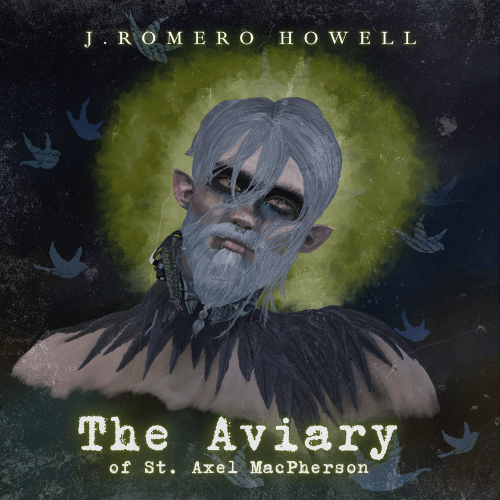
The Aviary of St. Axel MacPherson is the opening overture to a larger span of works called The Chronicles of Aerthe.
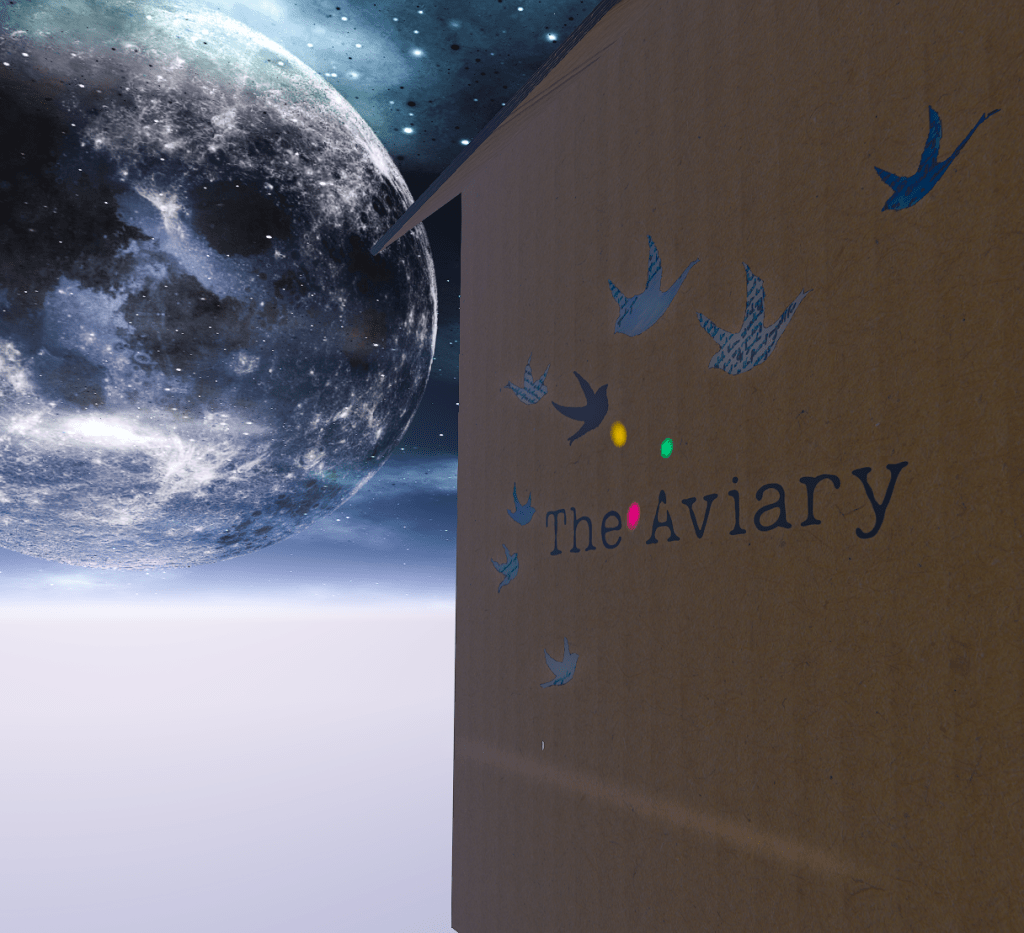
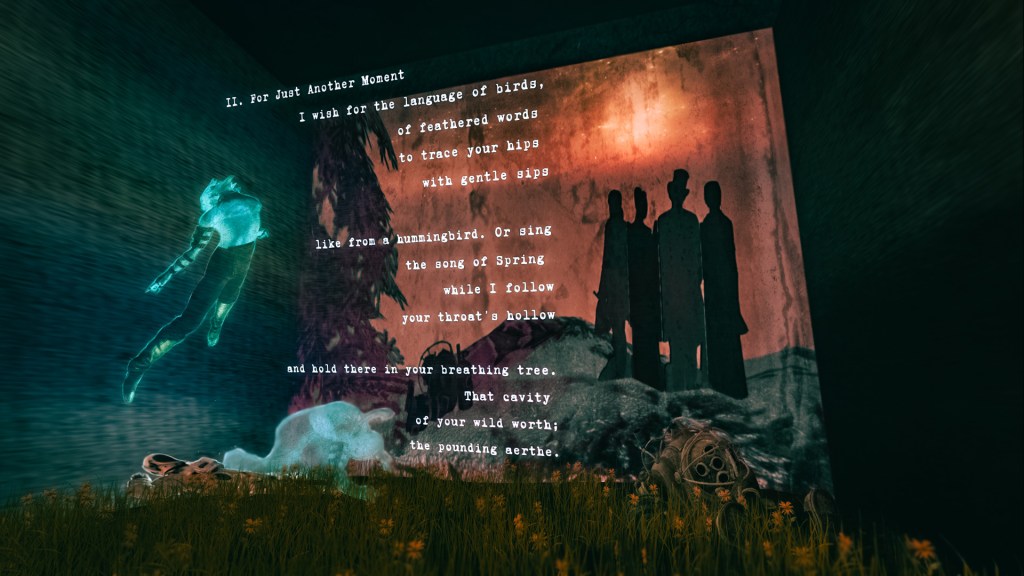
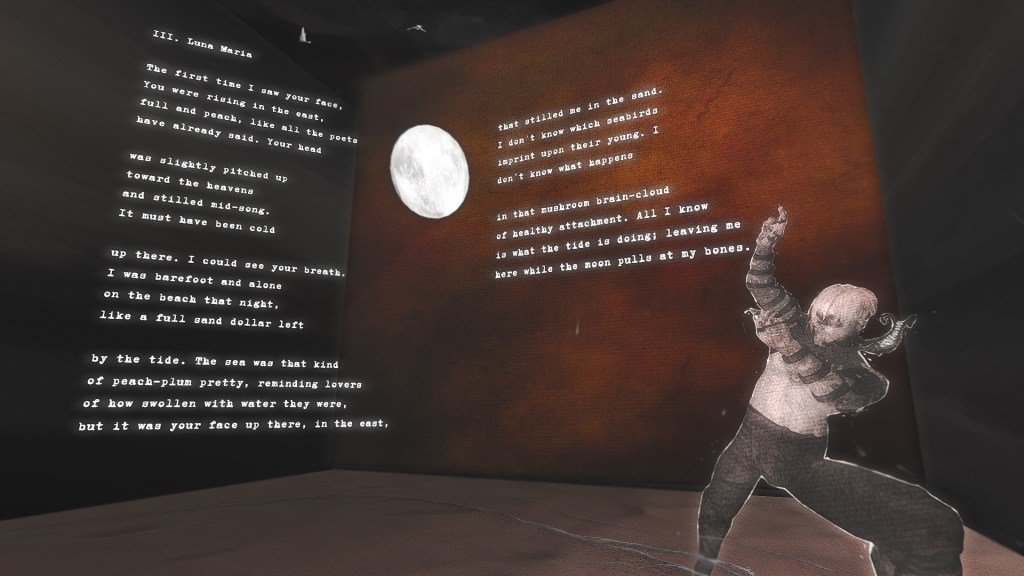
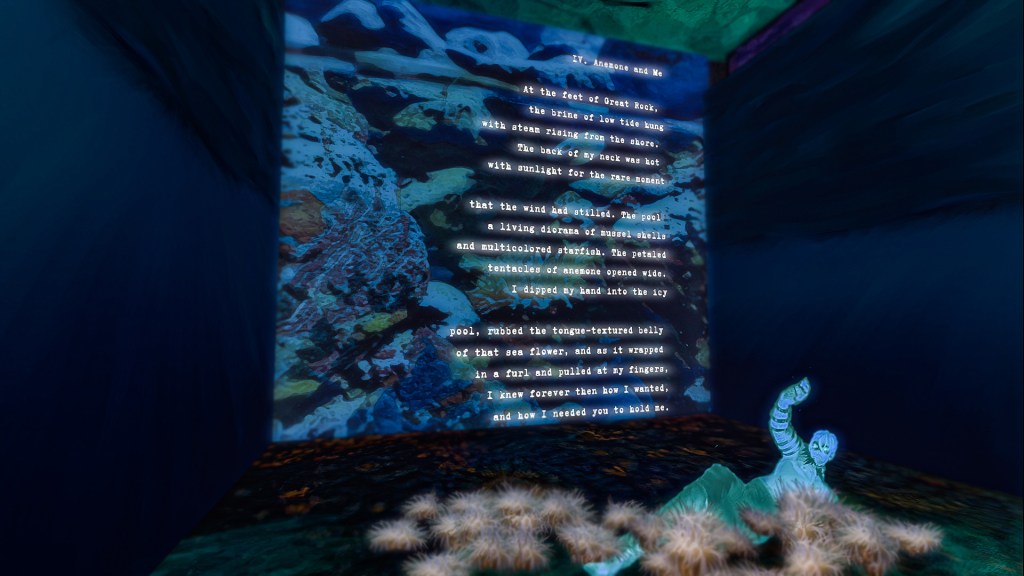
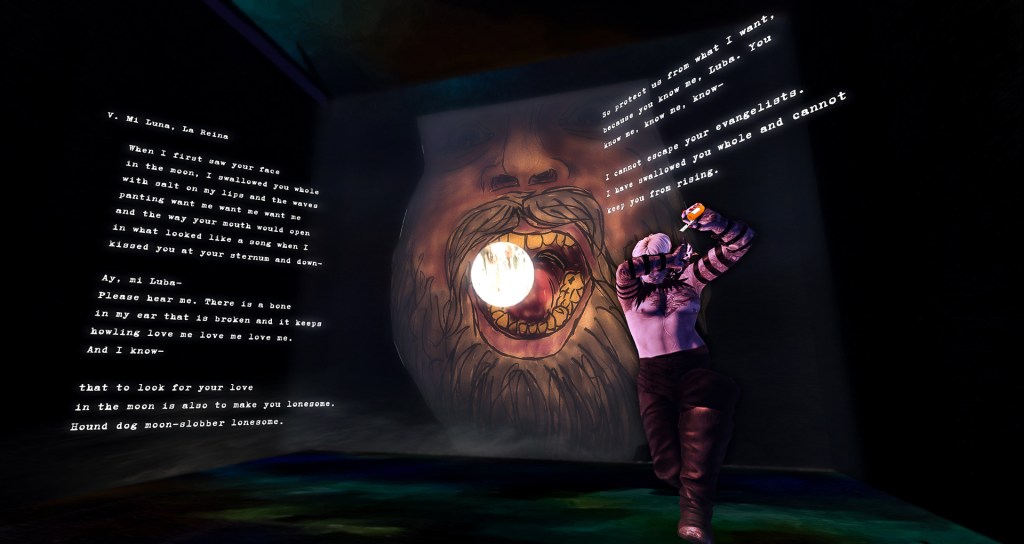
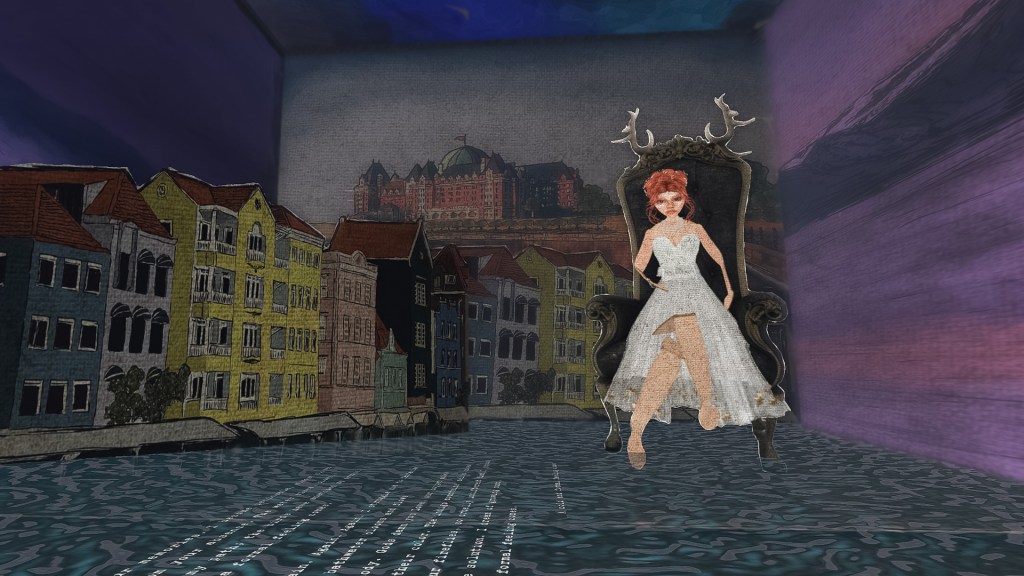
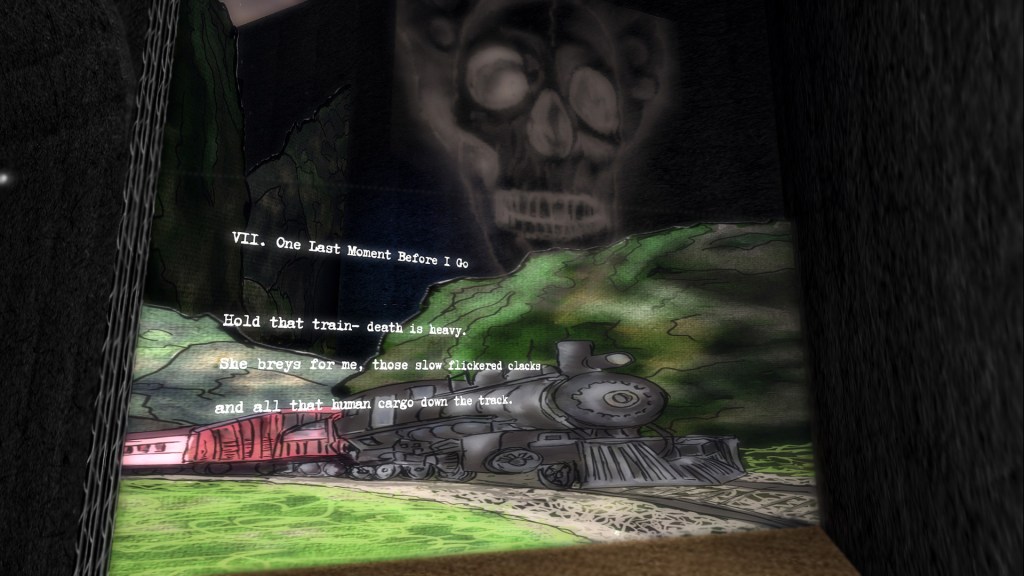
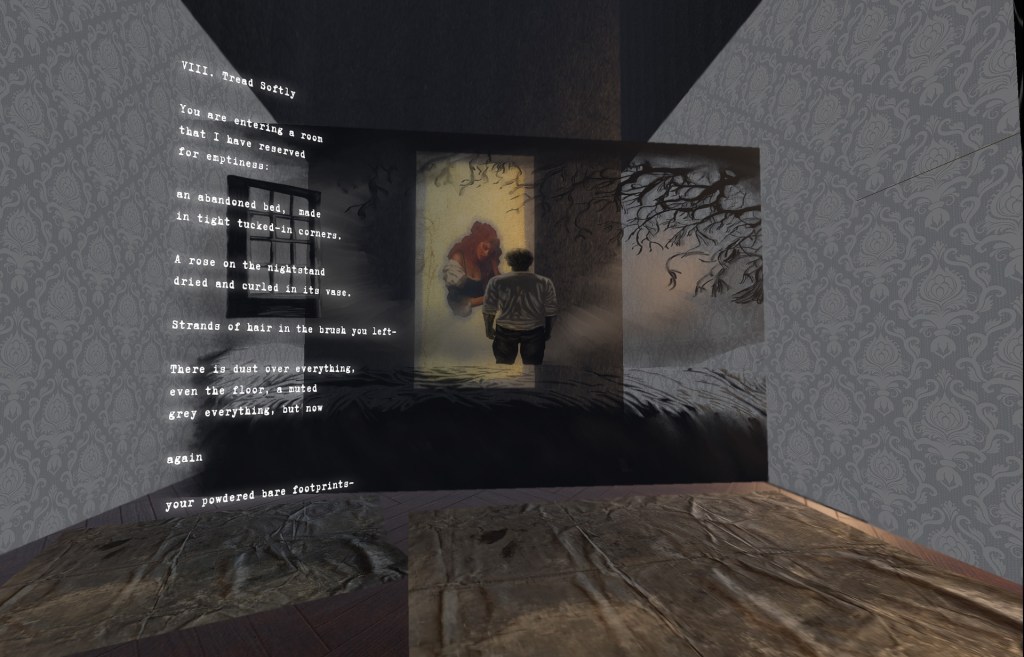
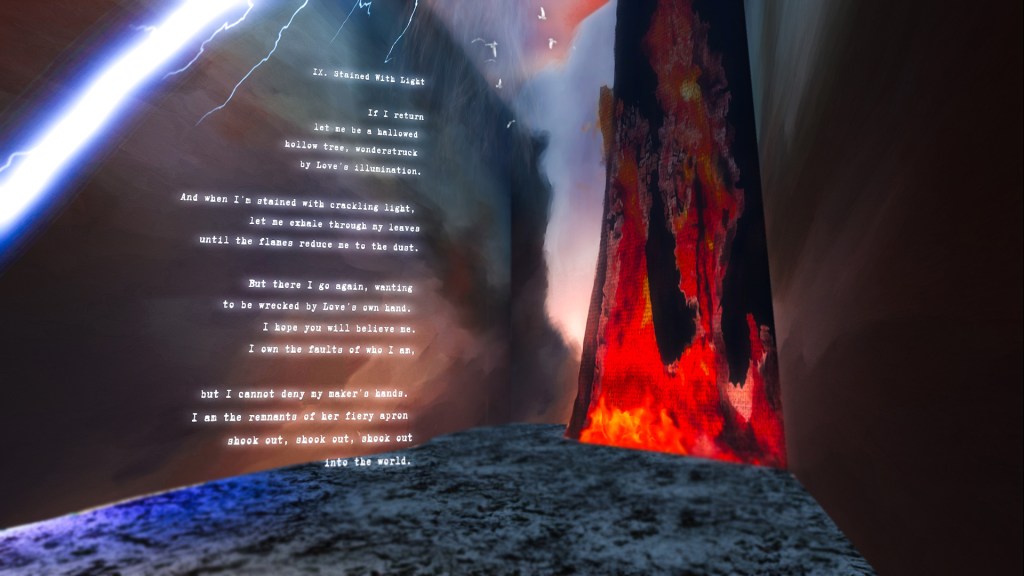
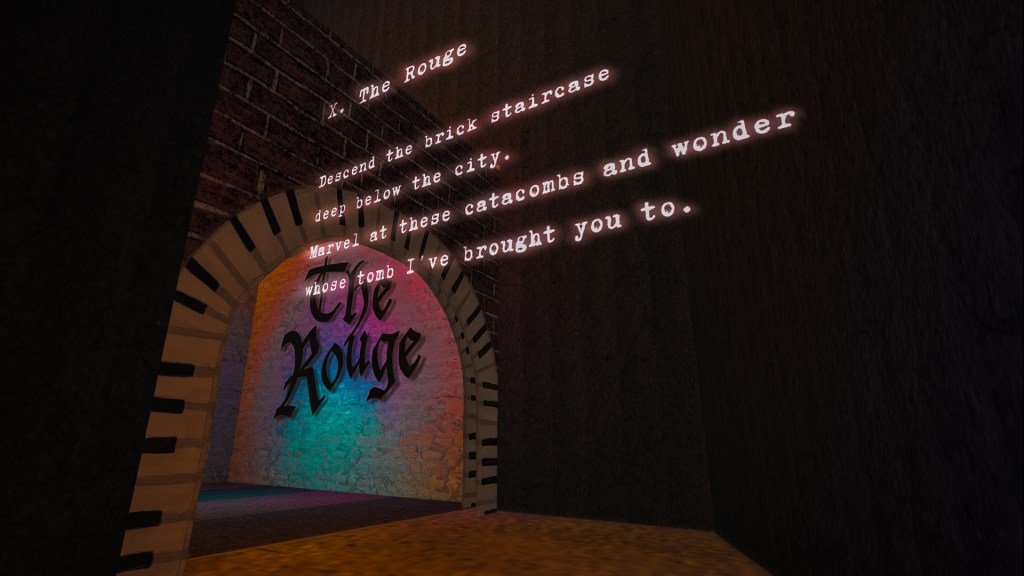
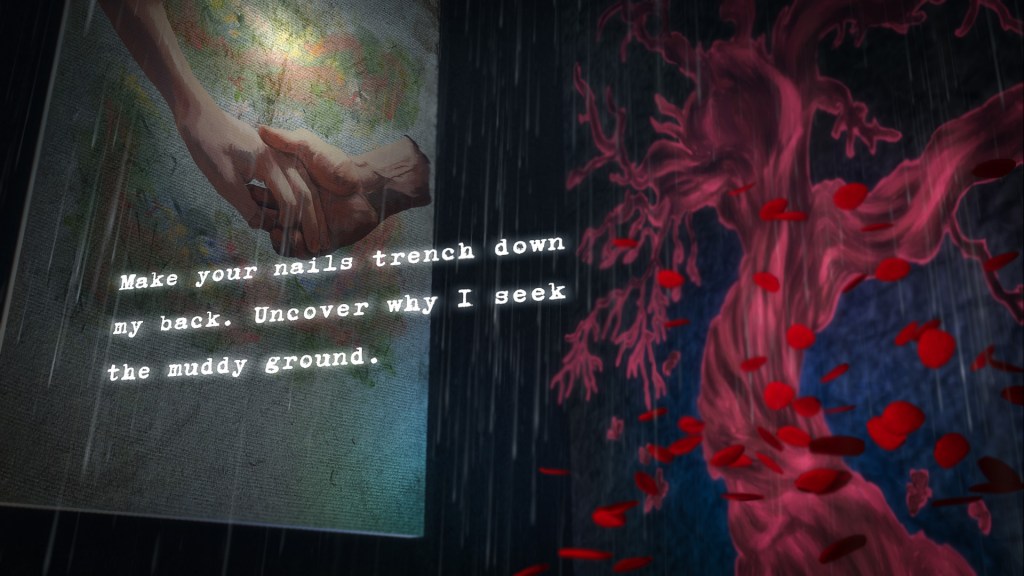
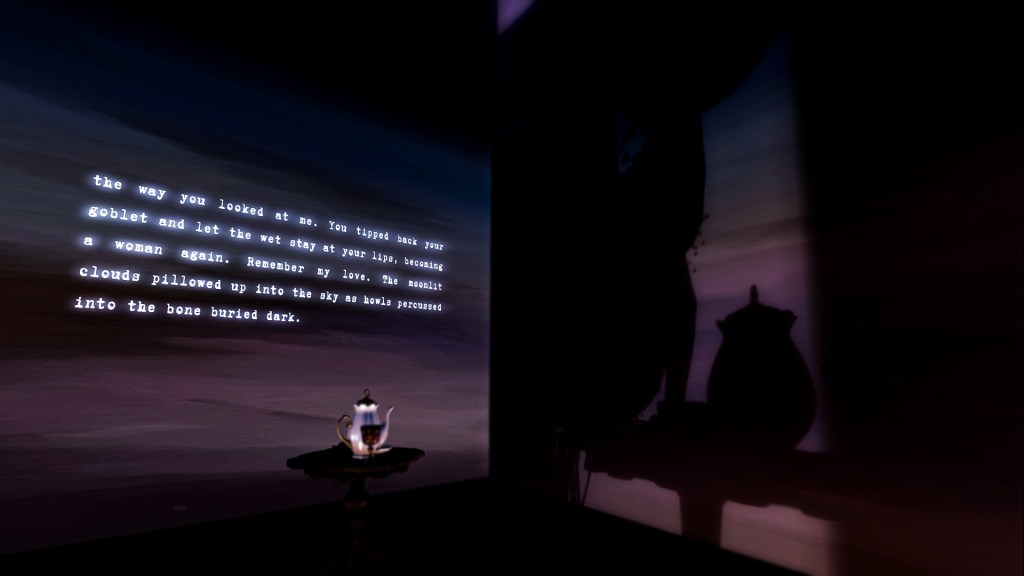
On August 16th, 2025 J. Romero Howell opened a 3D virtual exhibit from his self-designed multi floor complex; a floating cardboard birdhouse in the sky called The Aviary Cardboard Club and Gallery. A diverse and jubilant cross section of attendees from all over the world descended upon the Aviary Club, marking the occasion by donning their unique, self-styled cardboard avatars for a dance party (DJed by the brilliant artist and eternal goth theater kid, Crème Demilo) which resembled a grown up (but still young at heart) State Thespian Convention’s raucous closing night. The Aviary of St. Axel MacPherson Virtual World Exhibition showed from August 16th to September 15th 2025. You can still see the machinima of the exhibit below, and a limited edition hand-stitched chapbook will debut in September 2026.
AUTHOR’S NOTE:
Here lay an unknown man from an unknown world-
In a recent forest fire in Southern Wales, while mopping up the remnants of the damage, a firefighter discovered that one of the forest’s ancient oaks, approximately 800 years old, was charred to its hollow. It rested midway up the hill of what was a mossy boulder field before the burning. At the heart of the ancient tree, a lone standing stone rested. It had markings in what was found to be Gàidhlig, a form of Gaelic known to be written and spoken far north of this region. The inscription read,

“An seo tha an duine neo-aithnichte bho shaoghal neo-aithnichte laighe, le làichre[…illegible] a Bhan-iarla Ghaoil” or,
“Here lay the unknown man from an unknown world, with the [heart or hand?] of his Lady Love”.
The stone appeared to be engulfed by the heart of the tree over the ages of time.
The stone was also of the same composition as the standing stones nearby, which were among those known to have been harvested for the world-renowned Stonehenge. Still, the inscription was inconsistent with
both the suspected origin date of that wonder and the practices of the local ancient stone burial sites during that time. Even more perplexing to the archaeologists who came later was that the excavated remains below the ancient tree were found to be from the early 1980s A.D.
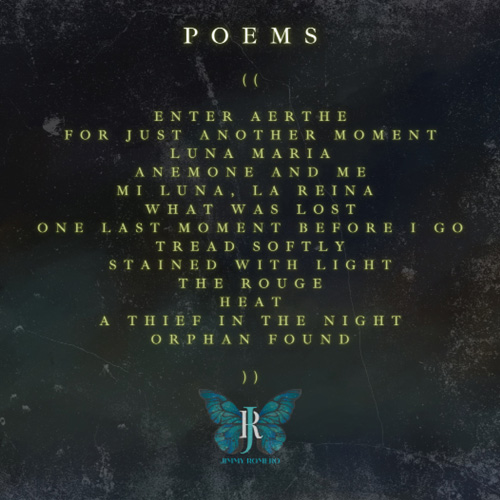
   Is the long love affair accounted for in these poems the territory of reality, or is it cloistered in the weaving corridors of a tortured lover’s mind? I leave it for the reader to decide.

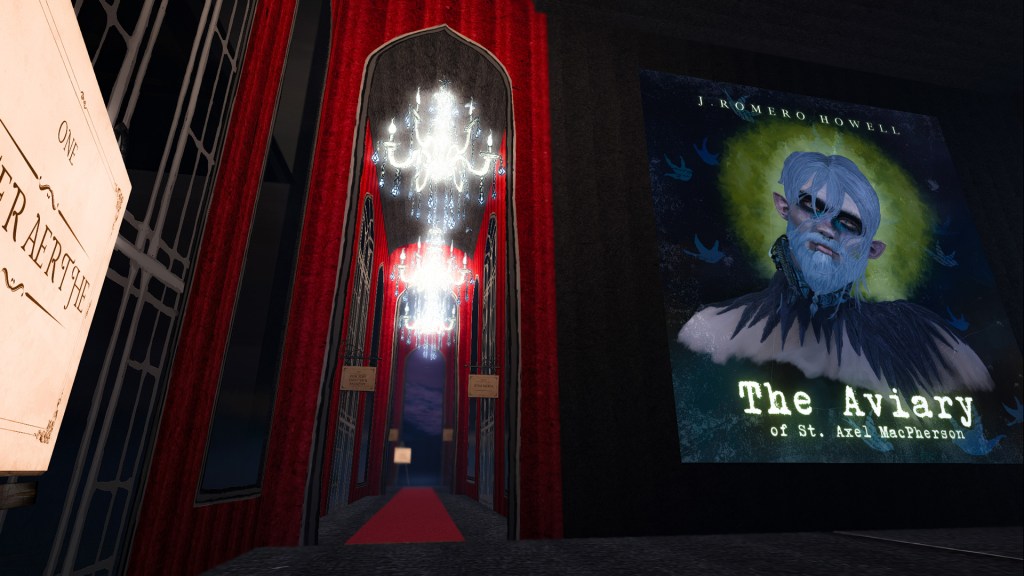
 This exhibit is a tribute to those poems, the mysteries of their finding, and to the ghosts of what may be an ancient and eternal love.
Respectfully,
J. Romero Howell
Curator
 j. romero howell